Better Hope NGO / Projects / Healthcare
Women's Health Awareness, Consultation and Research Programme
We bring a trusted female gynaecologist, a safe space to ask questions, and confidential research to adolescent girls and women in remote mountain communities of Kashmir.
Between 2021 and 2025, Better Hope ran general medical camps across remote Kashmir, offering check-ups, gynaecology, orthopaedics, dermatology, eye care and free medicines. Again and again, our teams saw the same gap: women and girls were the people least able to get the care they needed.
Many villages sit far from main roads, surrounded by mountains. Basic pharmacies are scarce, reliable health information is rare, and female doctors are hard to find. Menstrual and reproductive health is often not discussed openly, even within families.
So we designed a focused programme that brings respectful awareness, free consultation with a female gynaecologist, confidential research and longer-term support directly to these communities.
Each camp is more than an awareness event. It combines education, consultation and research, and opens a route to follow-up care.
Age-appropriate sessions on menstrual health, hygiene, bodily changes, reproductive health, and the importance of speaking up when something feels wrong.
A respectful setting where girls can ask sensitive questions directly to an experienced female gynaecologist, and receive her contact details for further care.
Confidential assessment forms capture real local needs, gaps and barriers, so future support is planned on evidence rather than assumptions.
Hosted by government schools in Baramulla and Bandipora. Nearby schools were invited, so each camp reached students from several surrounding villages.
Village-level camps in remote parts of Baramulla, Budgam and Bandipora, aiming to reach around 4,000 women.
Phase 1 ran from 17 to 27 August 2026. Hover over or tap a camp to see where it sits on the route.
On 22 August the team covered two locations in a single day. Each host school also welcomed girls from nearby schools, which is how 10 camps reached 85 schools.
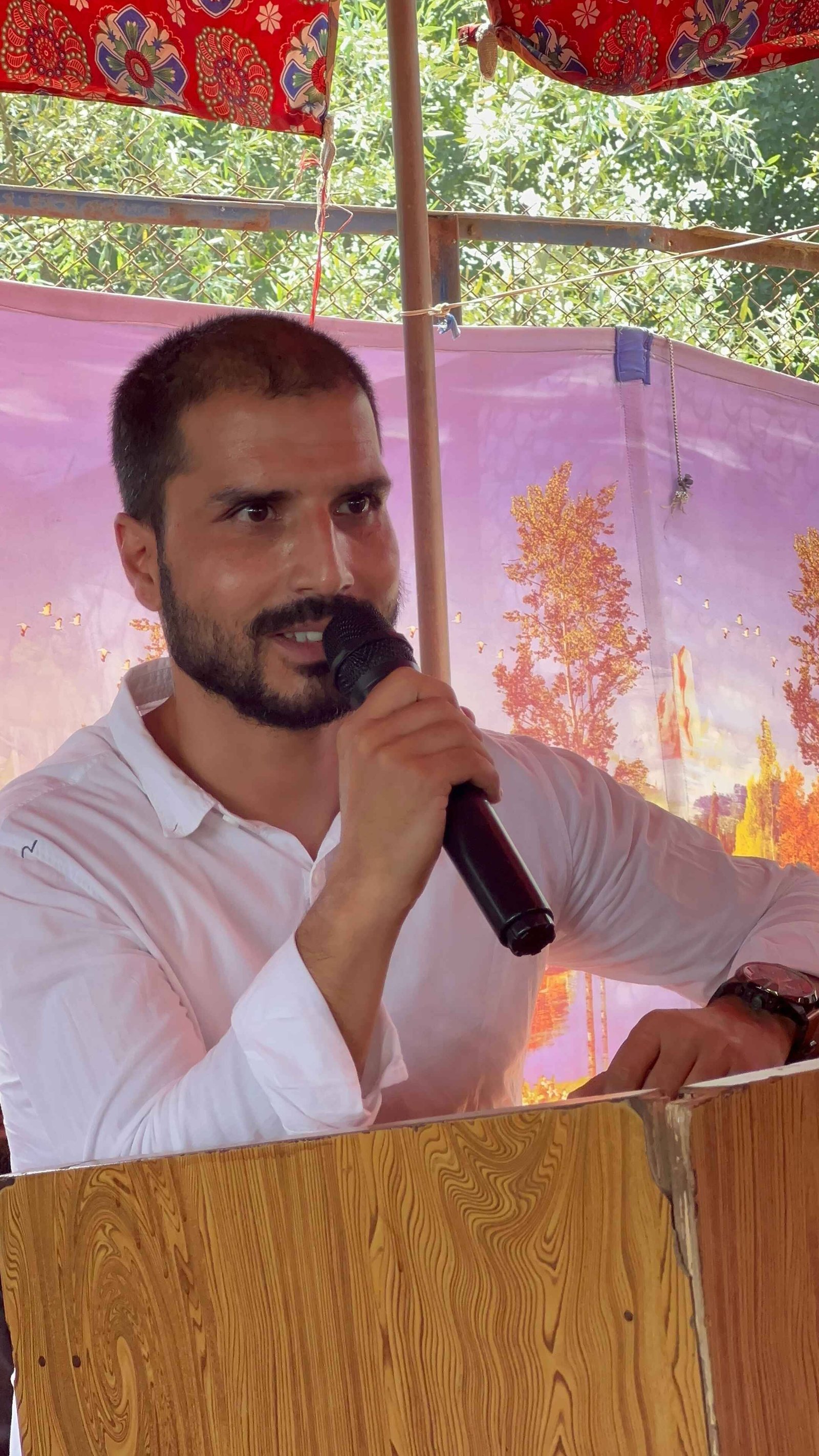
Moments from Phase 1: awareness sessions, girls filling in their assessments, consultations and the teams who made each day possible.
All photographs are shared with consent. Individual assessment responses remain confidential.
Our doctors talked with participants, answered their questions and gave medical guidance in a private, respectful setting. Contact details were shared so girls and their families can seek help after the camp ends.
Supported by Better Hope volunteers, 5 Rivers Heart Association volunteers, and the teams at every host and participating school.
Research is at the heart of this programme. Before the camps, we prepared a menstrual-health questionnaire adapted to local language and context. It is confidential, participants may skip any question, and individual answers are never discussed publicly.
What the assessment explores
Questionnaire based on the Menstrual Practices Questionnaire (MPQ v1.1), Hennegan, Nansubuga, Akullo, Smith and Schwab (2020), Global Health Action. Used and adapted under CC BY-NC 4.0 for non-commercial community research.
The team is giving its time and expertise to turn more than 1,200 responses into a credible, community-grounded paper that guides Better Hope's next steps and helps others working in these communities.

Schools rightly make time for sports and other activities. A girl's health deserves the same place. We want every girl to know what is normal, when to ask for help, and that she can talk about it, with a doctor and with her family.Aqib Majeed Dar, Founder, Better Hope NGO

Phase 1 was made possible with 5 Rivers Heart Association, who stood with the programme from planning to the final camp, contributing their time, expertise, volunteers and resources with dignity and professionalism.
What they delivered
Guidance before the camps
Before Phase 1 began, two members of 5 Rivers Heart Association helped us prepare: shaping the assessment questions and choosing the right format for the camps.
We publish what each phase costs, so every partner and donor can see how support turns into care.
Total Phase 1 expenditure
₹3,12,980
What it covered
Every participant can skip any question she prefers not to answer.
Female doctors, private spaces, and care for cultural and religious comfort.
Photos are shared only with consent and never reveal health concerns.
Health institutions, NGOs, CSR teams and researchers can co-deliver camps, use the research findings, or help build referral and follow-up care.
Discuss a partnershipFund one or more Phase 2 village camps, covering the doctor, awareness materials, travel and setup. We report back on every camp you support.
Sponsor a campDoctors, nurses, female volunteers, researchers, photographers and coordinators can join us on the ground or help with analysis.
Become a volunteerWrite to contact@betterhope.ngo or call +91 83475 40907.